FLIE pilot centre in Rotterdam officially opened and first pilot projects for industrial electrification launched
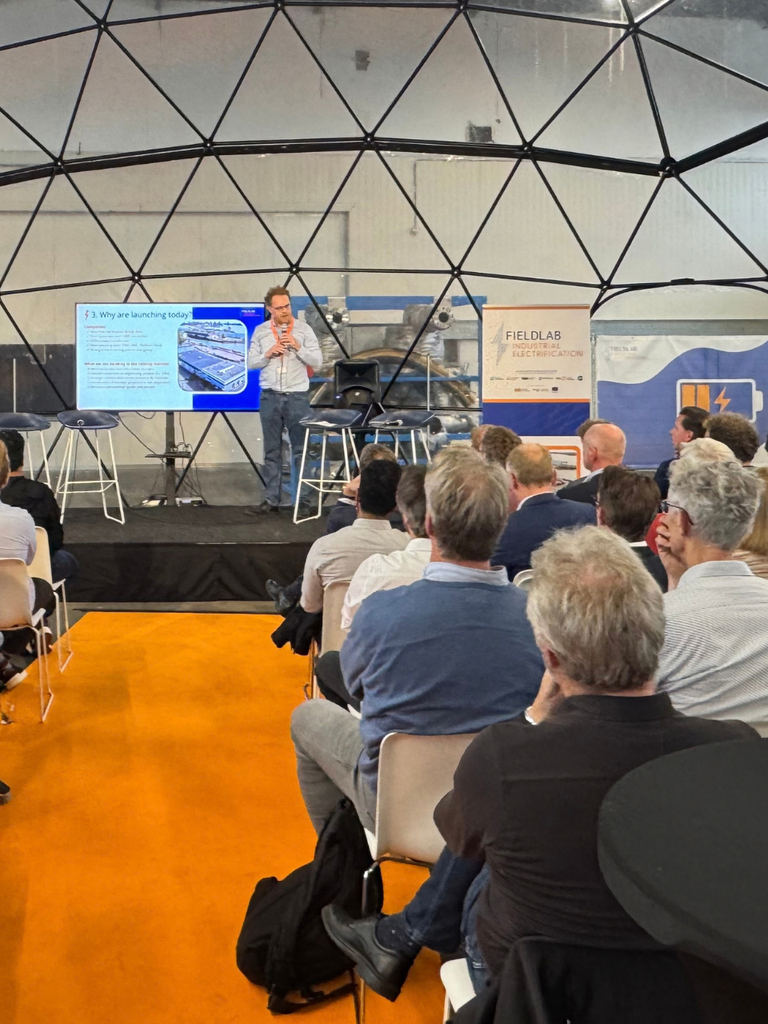
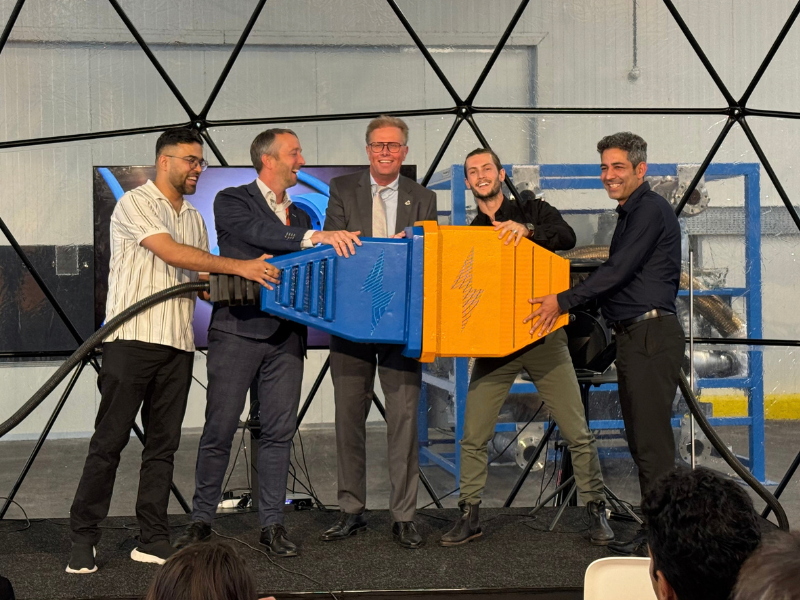
Fieldlab Industrial Electrification (FLIE) officially opened its new pilot facility at SubZero in Rotterdam today. The opening brought together 100 representatives from industry, government, academia and the innovation ecosystem. At the same time, FLIE announced its first three pilot projects, which will test various Power-to-X and electrification technologies in an industrial setting.
With the new pilot facility, FLIE now has a physical test environment where technology providers, industrial companies, energy companies and research institutions can develop, test and validate technologies under real-world conditions. In this way, FLIE focuses on the transition from technological development to industrial application.
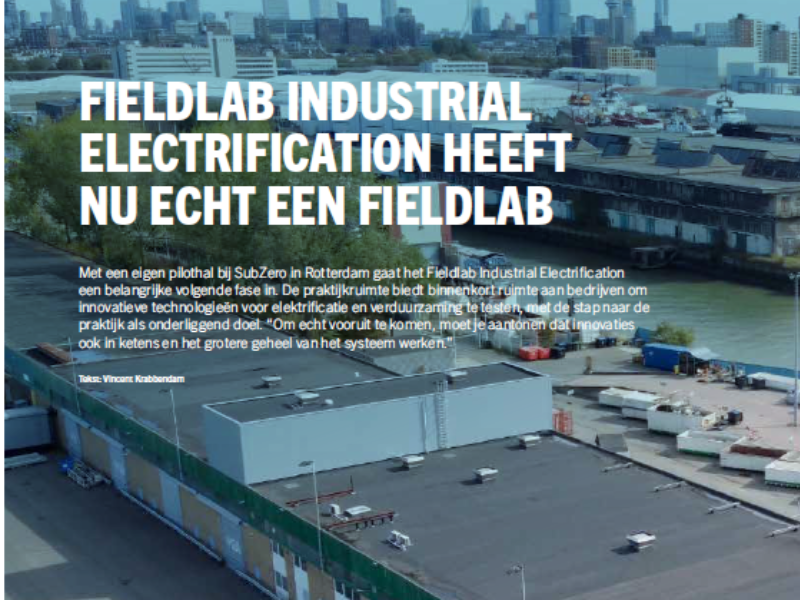
The pilot facility is located at SubZero in the Merwe-Vierhavens area (M4H) in Rotterdam and provides space for pilot projects involving, amongst other things, electrification, hydrogen and Power-to-X technologies. The facilities are geared towards technologies at an advanced stage of development, with the aim of accelerating the transition to large-scale industrial application.
“With the opening of this pilot facility, we are providing the Power-to-X ecosystem in South Holland with a physical space in which to actually test ideas. That is precisely what it’s all about: moving from practice-oriented research to application on an industrial scale.”.“— Auke Ferwerda, FLIE partner on behalf of Platform Zero.
From technology to practice
During the opening, the development of the Power-to-X industry took centre stage in a panel discussion featuring representatives from government, research institutions and the Rotterdam business community. Led by moderator Mare Straetmans, founder of Platform Zero, the discussion covered where electrification and Power-to-X can already be applied in industry, the challenges companies face in making the transition from demonstration to industrial application, and the role that the South Holland and Rotterdam innovationecosystem in South Holland and Rotterdam can play in this regard.
“The Port of Rotterdam is a major source of CO₂ emissions, which makes this a major challenge. A facility like FLIE can really make a difference here!“— Marco van Steekelenburg, Province of South Holland, Energy Transition Team”
“This is a complex issue and there is no magic solution. We need to test and validate a great many innovations.“– Mark Stoelinga, Port of Rotterdam Authority, Director of Energy”
“Bear in mind that this initiative is attracting international interest. People all over the world are watching us – this is an excellent place to carry out pilot projects.“— Monalisa Goswami, TNO, Head of the Power-to-X Business Development portfolio, Chair of VoltaChem”
![Img 5990[1]](https://flie.nl/wp-content/uploads/2026/09/IMG_59901-1-1024x768.jpg)
Announcement of the first pilot schemes
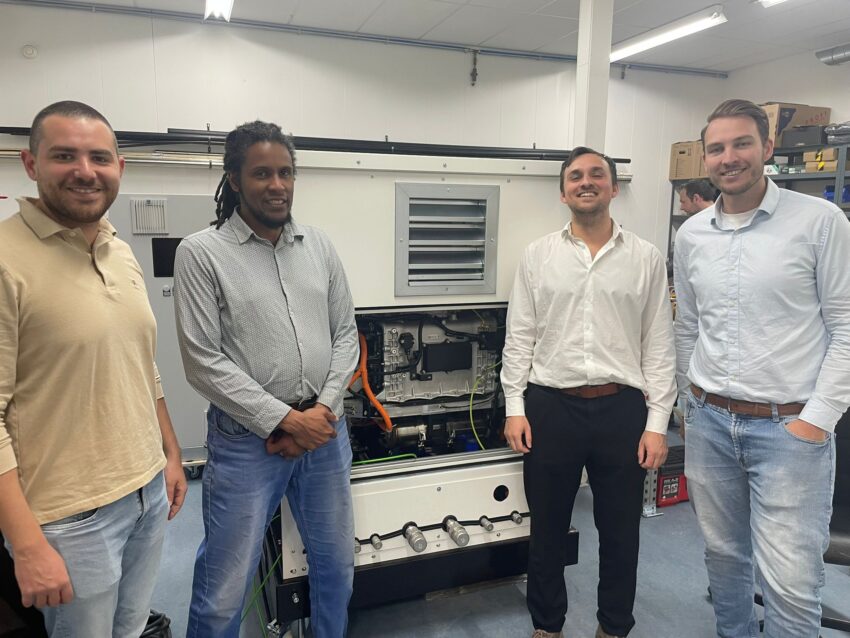
The opening also marks the start of the first three pilot projects in the FLIE pilot hall. FlowVolta, ZEF, Equans and TNO will each be working on a different technology and application:
- FlowVolta is testing the next generation of electrolysis systems that can operate flexibly depending on the availability of renewable energy.
- ZEF is testing a Direct Air Capture (DAC) plant designed to capture CO₂ from the air, which is being integrated into a system for the production of alternative fuels.
- Equans is testing various usage profiles on an Inocel fuel cell. The pilot project is investigating how the fuel cell performs under different operational conditions for applications in industrial and maritime energy systems.
- TNO is installing a commercial electrolyser at FLIE to learn how electrolysers can be successfully integrated into an industrial environment. The project will provide practical experience in hydrogen production, storage, utility integration and the connection to Power-to-X technologies.
Getting started yourself? FLIE helps!
FLIE provides the facilities in which these technologies can be tested to gain a better understanding of their technical performance, operational conditions and the applicability of new electrification technologies within the industry. This constitutes a crucial validation step for the technology and facilitates its introduction to industrial partners.
The Fieldlab offers a unique Power-2-X voucher scheme to support projects aimed at electrification and sustainability. This scheme allows you to receive grants for feasibility or pilot studies.
A feasibility study 100% is eligible up to a maximum of €15,000. You can use this voucher for, among other things:
- Research and analysis: feasibility studies, business case analyses, market studies or infrastructure research.
- Advice around regulations: understanding regulations, financing and permits.
- Financing advice: a tailored financing scan.
- Technology assessment: exploration, selection and specification of technologies.
- Supplier selection: including risk analysis and demonstrations.
A pilot study 50% is eligible and can be used to validate your technology in FLIE's pilot hall.
The cooperation partners of the Fieldlab are Deltalinqs, Port of Rotterdam, InnovationQuarter, FME, TNO and Platform Zero and is being shaped in close cooperation with the ERDF grant, the Municipality of Rotterdam and the Province of South Holland.