

ENRICH pilot study – integrated hydrogen and DC energy system
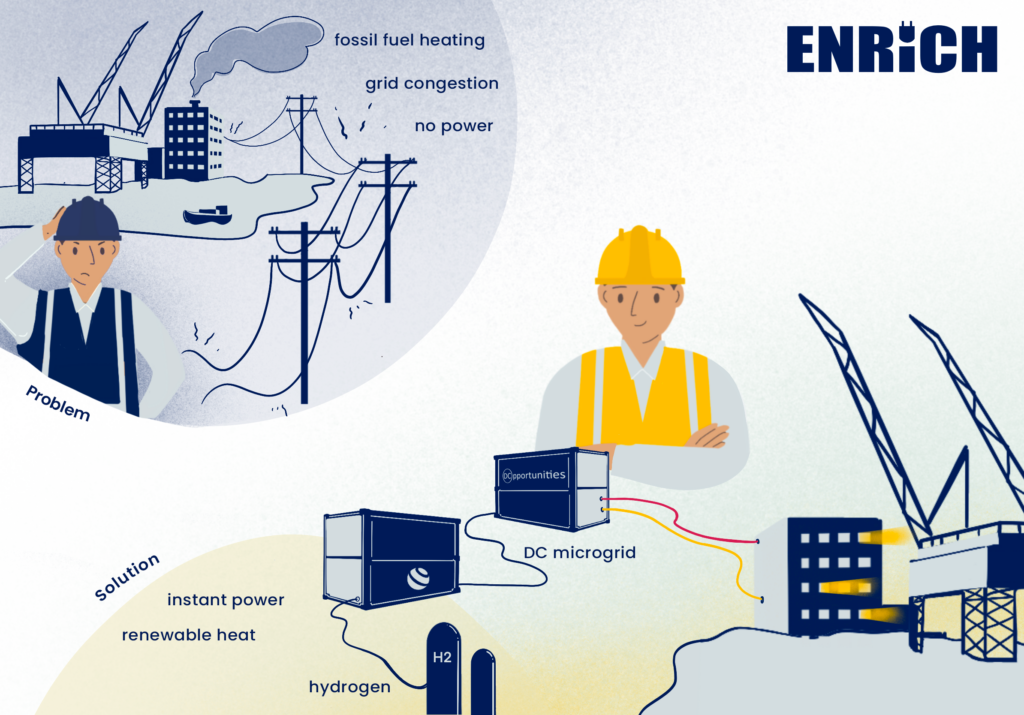
Industrial estates with high heat demand are increasingly facing bottlenecks due to grid congestion and limited scope for expanding the electricity grid. At the same time, there is a pressing need to replace natural gas and reduce CO₂ emissions. This calls for solutions that combine sustainability with flexibility in the energy system.
In response to this, HyER Power and DC Opportunities have developed the ENRICH concept: an integrated system for the local, emission-free supply of heat and electricity based on hydrogen and direct current (DC) technology, which can operate largely independently of the existing electricity grid.
Research design
In collaboration with Fieldlab Industrial Electrification (FLIE), a feasibility study was carried out on the ENRICH system. The study focused on technical, economic and organisational feasibility, as well as the potential for application and upscaling in industrial estates.
The following factors were taken into account:
- Optimal system configurations and performance
- Costs, revenues and business cases
- Potential for application in Rotterdam and the surrounding area
- Appropriate operational and organisational models for individual businesses and collectives
In addition, work has been carried out on the further development of the technology, including the optimisation of system components and the development of software for simulation, design and maintenance. Promising locations have also been identified, and research has been conducted into how implementation and collaboration can be organised.
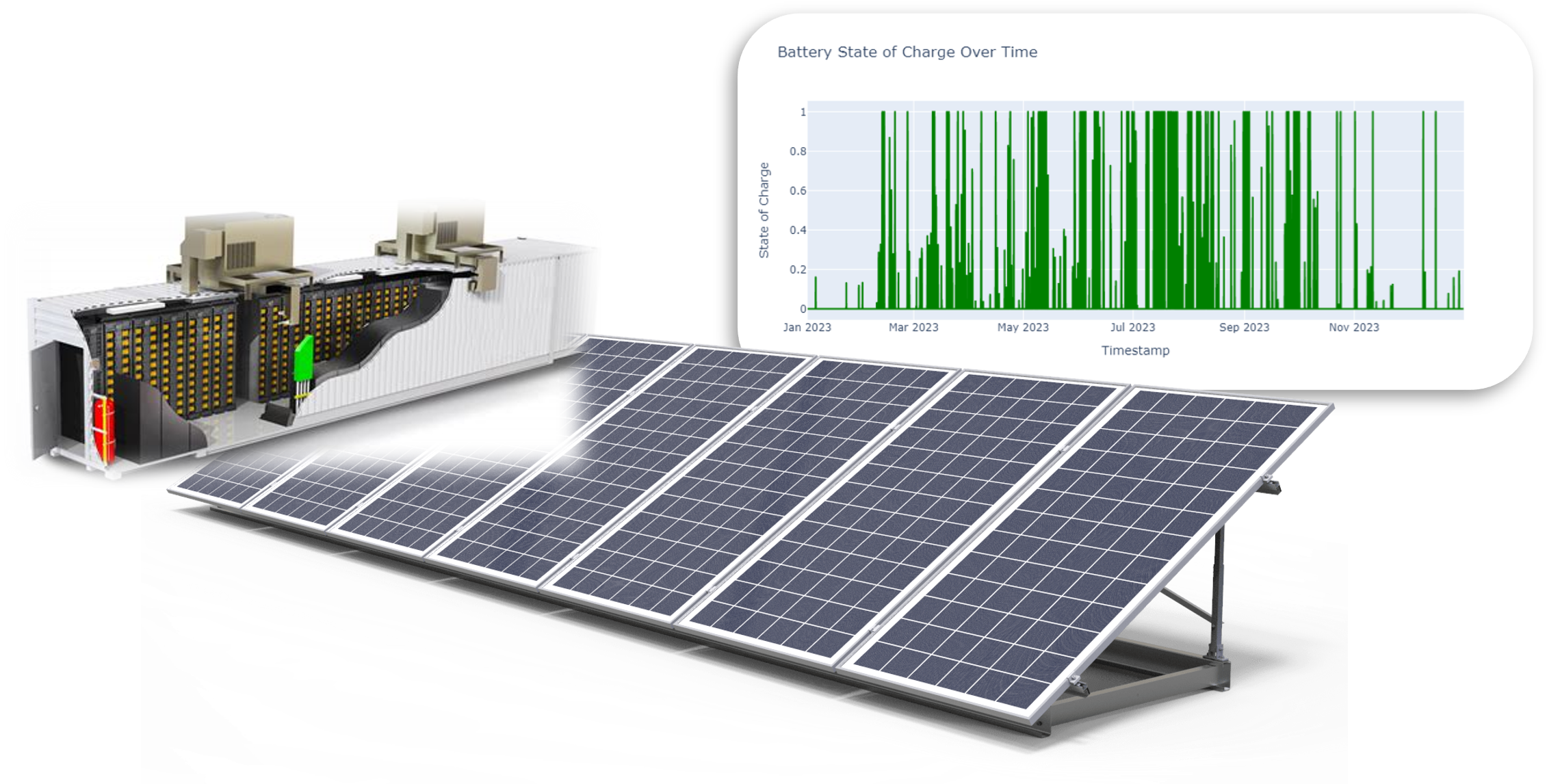
Integrated hydrogen and DC energy system for local heating and electricity supply
4–20 per cent lower conversion losses per conversion step
A 40–50 per cent reduction in cabling compared with AC systems
Modular and scalable, suitable for use at both operational and site level
Can be used independently of the electricity grid; suitable in the event of grid congestion
Main results
The feasibility study shows that the ENRICH system offers clear technical and economic benefits:
- 4–20 per cent reduction in conversion losses per conversion stage through direct DC coupling
- 40–50 per cent less cabling material required, saving both costs and space
- A halving of capital expenditure (CAPEX)
- Additional income of up to €200 per kW per year is possible through market interaction
- Lower total cost of ownership (TCO) than battery systems, natural gas CHP units and natural gas boilers of a comparable size, assuming a feasible hydrogen price
Consideration was also given to where the application of ENRICH holds the greatest promise. Grid congestion is a major bottleneck, particularly in the Rotterdam port area. Several industrial estates in and around this area have emerged as promising locations, particularly where existing or planned hydrogen infrastructure is in place. The complete replacement of natural gas at the industrial estates studied could, through the use of green hydrogen, lead to a CO₂ reduction of up to 93 per cent.
Next steps
These results have laid a solid foundation for the further implementation of the ENRICH system. The next step is to finalise the details of the roll-out and organisation with a view to putting it into practice.
Various operating models have been explored for businesses, including purchase, lease and Energy-as-a-Service (EaaS). For business parks in particular, a collective approach via existing structures such as a Business Investment Zone (BIZ) offers opportunities, for example through collaboration within a co-operative and joint agreements with the network operator. For management and maintenance, the focus is on collaboration with a specialist service provider, so that businesses have a single professional point of contact.
HyER Power and DC Opportunities remain focused on the further development and upscaling of their technologies.
About FLIE
FLIE is a joint initiative of Deltalinqs, FME, the Port of Rotterdam, InnovationQuarter, Platform Zero and TNO, and is closely supported by the Province of South Holland, the City of Rotterdam and the ERDF grant.
Does your organisation have sustainability ambitions and would you like to explore the possibilities of electrification? Or do you provide an electrification solution and would you like to get in touch with end users and other important stakeholders? Then get in touch with us. We would love to help you!