Electrification
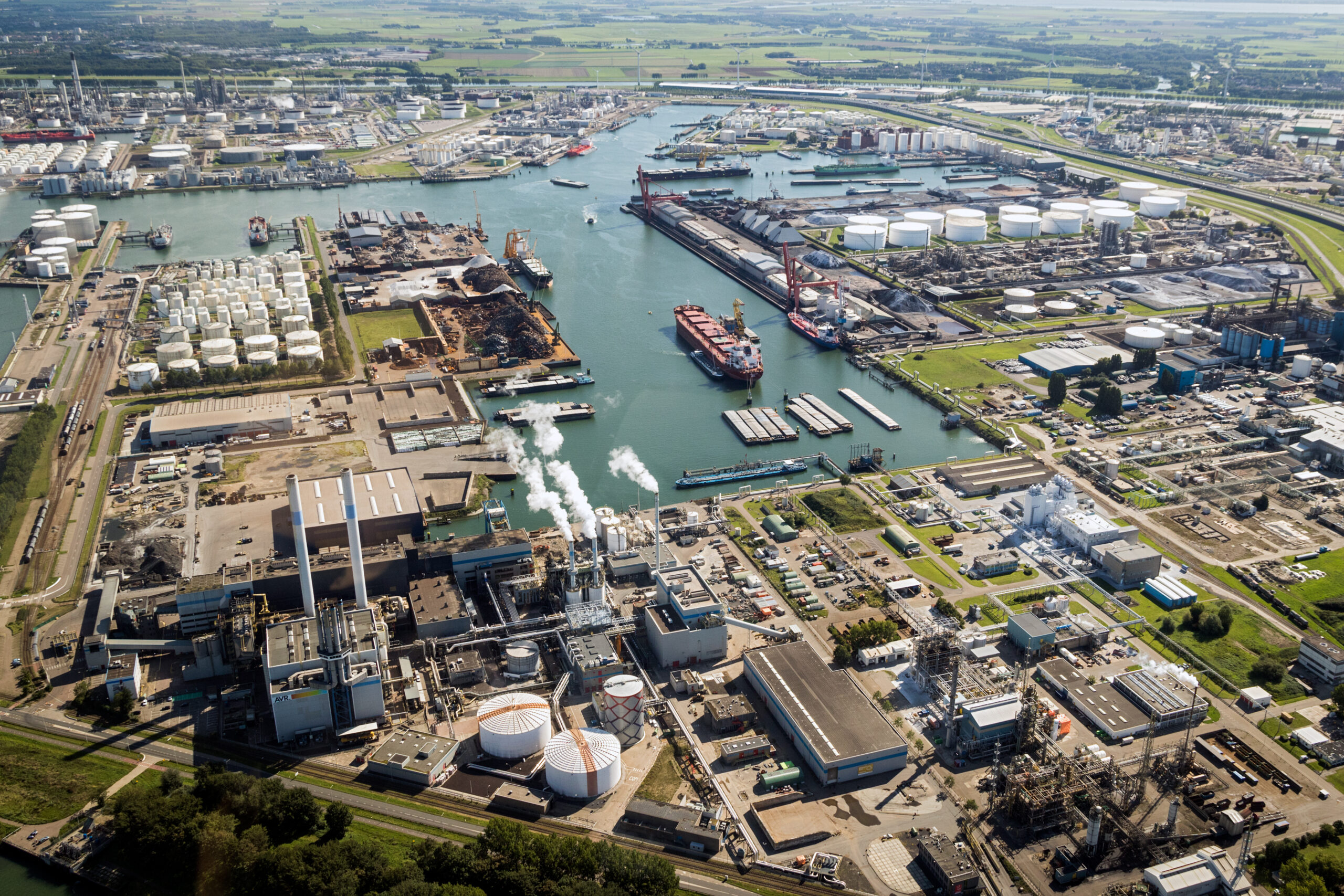
The Rotterdam-Moerdijk port industry cluster is a major consumer of energy and causes almost 20% of CO₂ emissions in the Netherlands. To meet the goals of the climate agreement, drastic measures such as CO₂ reduction in industry, upgrading and efficient use of energy and raw materials are needed. Applying electrification, also known as Power-2-X, is a proven important and not to be ruled out sustainability option. Fossil-driven processes are replaced by electrically driven processes.
Acceleration is possible!
To accelerate the development and implementation of Power-2-X technology to achieve large-scale CO₂ reduction in industry, the Rotterdam Fieldlab Industrial Electrification has been set up. In this Fieldlab, technologies can be tested on an industrially relevant scale in a practical environment. The Fieldlab also offers the opportunity to further develop ideas and validate business cases together with the entire chain; end-users system integrators, technology companies, suppliers, knowledge and educational institutions. The initiative is strongly supported by the Municipality of Rotterdam, Province of South Holland and the Ministry of Economic Affairs and Climate and the European Commission.
What is industrial electrification?
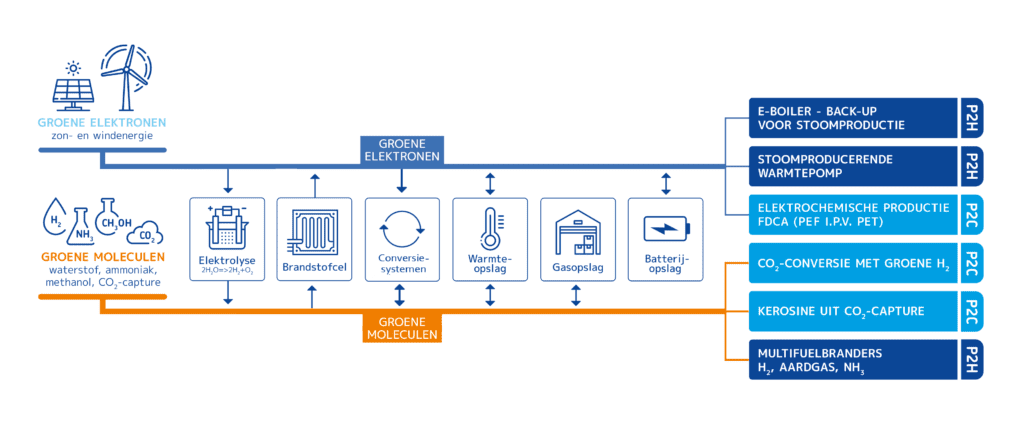
Industrial electrification, also known as Power-2-X, is the replacement of fossil (oil, gas and coal) powered processes with processes powered by green electricity or green molecules. Under Power-2-x, we distinguish the following components:

Power-to-Heat
From fossil boiler to electric heat
Making industrial heat more sustainable starts with the right choice of technology. With Power-to-Heat, you deploy electricity as a strategic driver for process heat. In doing so, you replace natural gas-fired systems with electrically driven technologies such as heat pumps, electric boilers and e-heaters. Power to Heat offers proven solutions for companies looking to electrify their heat supply, from heat pumps to electrode boilers, and is applicable in a variety of industries, from food to chemicals and logistics. FLIE supports you with feasibility studies, field tests and guidance on developing scalable solutions.
Power-to-Hydrogen
Hydrogen as key to chemical sustainability
Hydrogen plays a strategic role in the electrification of industrial chains. With Power-to-Hydrogen, you convert renewable electricity to hydrogen that can be used as feedstock, energy carrier or buffer in flexibility issues.
Companies in the chemical, refining and industrial sectors that want to make process steps more sustainable, meet peaks in energy demand or replace CO₂-intensive raw materials can benefit from this technology.
FLIE supports organisations in the exploration, pilot development and integration of hydrogen solutions within existing processes.
Power-to-X-CCU
CO₂ as raw material instead of waste
With Power-to-X-CCU, you harness electricity to convert CO₂ into products such as synthetic fuels, chemicals or materials. Using Carbon Capture and Utilisation (CCU), rCO₂ becomes usable as a raw material and can meet the growing demand for alternative carbon sources. There are opportunities for South Holland, and the Rotterdam port area with its defossilisation task, to become a leader in these new value chains.
In the whitepaper Harnessing Power-to-X for a sustainable carbon future, describes how Power-to-X-CCU technologies offer a realistic prospect of replacing fossil carbon with circular carbon.
Getting started with electrification?
The Fieldlab Industrial Electrification
The Fieldlab Industrial Electrification consists of two main components:
- On the one hand, a 'Fieldlab Hub' where work will be done to test and scale up new technologies in the value chain present. Cooperation will be sought with industry and research and educational institutions in the region. There is also a special focus on cooperation with potential value chain partners and space for realising business cases.
- The second part of the Fieldlab consists of on-site demonstration sites at companies where these new techniques can be tested and applied in practice.
Getting started with electrification? Then click here.
Want to know more about Electrification? Read these interesting publications: